INDIANA MANUFACTURERS CONFRONT COMPOUNDING THREATS AS TRADE WAR, CYBER ATTACKS STRAIN INSURANCE MARKET
Manufacturing drives more than a quarter of Indiana's economy. The threats hitting that sector right now are unlike anything insurers — or manufacturers — have seen in decades
By Shelby White | Photo by Jennifer Boss | May 20, 2026
Andrew Ball spent two decades running manufacturing operations in Indiana and around the world before switching careers to sell insurance. He thought he understood risk. He no longer does.
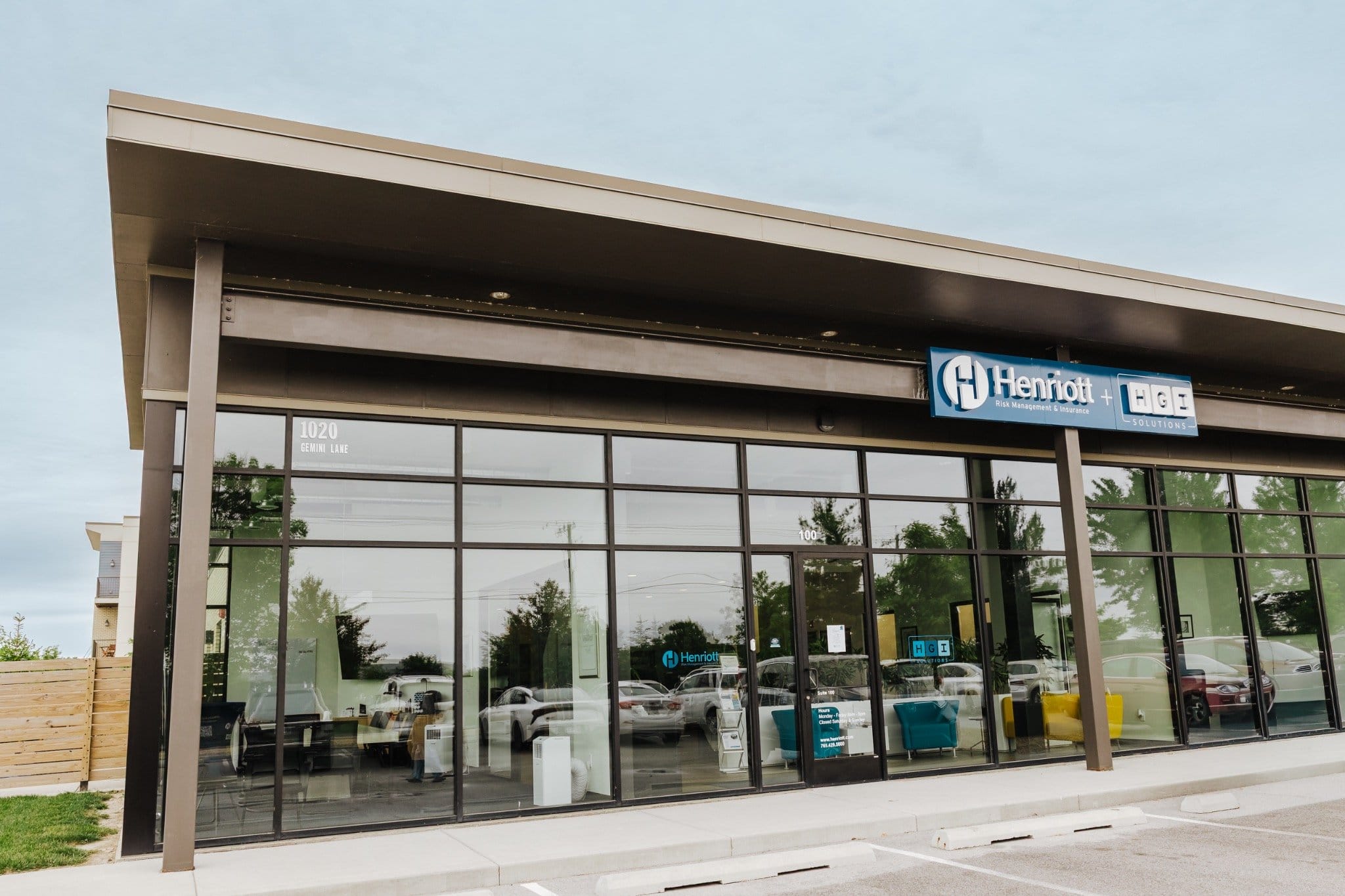
Ball, formerly co-chief executive of Henriott Group, a Lafayette insurance firm founded in 1963 that HUB Internationalacquired last April, now serves as senior vice president at HUB, one of the largest insurance brokerages in the country. He has watched the threats facing Indiana manufacturers stack up in ways that don't quite fit into any actuarial model.
Tariffs are inflating the value of insured assets faster than policies can be updated. Ransomware syndicates have made factory floors their most profitable hunting ground four years running. And a trade policy that rewrites the rules by the month has left underwriters reassessing risks they thought they had figured out.
“I have never seen a more dynamic situation than I do today,” Ball said. “This rapidly changing environment brings huge opportunities to Hoosier manufacturers but also risks, both known and unknown.”
The unknown part is what keeps people up at night.
Indiana manufacturers are contending with a convergence of threats that individually would be manageable but together are straining an insurance market struggling to keep pace, driving up premiums, tightening coverage terms and forcing carriers to rethink what it really costs to protect a factory in 2026.
The stakes here are higher than almost anywhere else in the country. Manufacturing is Indiana’s largest economic sector, generating $114.6 billion in 2025 and accounting for more than 25% of the state’s gross domestic product. In the Greater Lafayette region alone, roughly 177 manufacturing enterprises employ more than 35,000 workers, according to the Indiana Department of Workforce Development.
Data from the Washington Center for Equitable Growth shows Indiana and Michigan rank among the states with the highest employment exposure to tariff-affected industries, driven by large shares of workers in auto manufacturing, machine shops and related sectors. When Washington changes trade policy, Indiana absorbs the shock before most others do.
The Indiana Manufacturers Association (IMA), the state’s oldest and only trade group focused exclusively on manufacturing, moved last week to address that exposure directly, announcing a formal partnership with HUB International to connect its member companies with Indiana-based insurance and risk advisors.
Through the arrangement, IMA members gain direct access to HUB advisors for business insurance, risk management and employee benefits, services the association says its members increasingly need but have struggled to assemble in one place.
HUB operates a dedicated programs and associations division that has built similar arrangements across industries nationwide, and trade groups from manufacturing to professional services have increasingly turned to large brokerages to deepen the value of membership beyond networking and advocacy.
The model is common among the country’s largest brokerages; Marsh McLennan, Arthur J. Gallagher & Co. and Locktonall run similar programs. The IMA selected HUB.
It is a modest intervention against forces that are anything but. Tariffs raise production costs, which reduce net profit and compress the business income coverage values that manufacturers rely on when operations are interrupted by fire, equipment failure or other losses, according to EHD Insurance, a commercial insurance firm that advises manufacturers.
When companies pass those higher costs to customers and sales revenue rises, general liability premiums — which are typically calculated as a percentage of gross sales — climb in turn. The result is a feedback loop in which the same economic forces squeezing manufacturers are simultaneously raising the cost of protecting against them.
Insurers have responded by running quarterly valuation assessments tied directly to White House tariff announcements and incorporating geopolitical risk scores into their underwriting models, according to the law firm Benesch Law which advises insurers on trade and logistics. Two years ago, that kind of real-time policy repricing would have been unusual. Today it is standard practice at major carriers.
Mikel Berger, president and CEO of Greater Lafayette Commerce, the region’s chamber of commerce and economic development organization, said the pressure registers at the local level.
“When manufacturers face this kind of pressure — from tariffs, from cyber threats, from workforce costs — the support systems around them have to step up,” he said.
The cyber threat is compounding an already difficult picture. Manufacturing represented 27.7% of all cyberattacks tracked globally in 2025, the highest share of any industry, according to IBM’s X-Force Threat Intelligence Index, an annual report that draws on incident response data, dark web monitoring and penetration testing across industries. Exploitation of public-facing applications — software and systems accessible over the internet — was the most common entry point, accounting for 32% of observed cases.
Ransomware incidents targeting the sector surged 56% year over year, according to Check Point Research, a cybersecurity firm. The United States recorded more manufacturing ransomware incidents than any other country, with median costs running $500,000 per incident. Many of the most vulnerable targets are smaller suppliers with legacy equipment and thin IT budgets, exactly the kind of companies that make up the bulk of Indiana’s manufacturing base.
In casualty and specialty insurance lines — particularly cyber coverage — insurers are adopting more selective underwriting standards and prioritizing accounts that can show documented, data-driven efforts to reduce losses, according to the Christensen Group Insurance, a Minnesota-based insurance and risk advisory firm that tracks manufacturing sector trends. Manufacturers who have not done that work may find fewer options and higher premiums when their policies come up for renewal.
IMA President and CEO Andrew Berger said the partnership is designed to give members the tools to navigate that reality.
“By partnering with HUB International, we are giving Indiana manufacturers direct access to specialized expertise that can help them mitigate risk and ensure long-term operational stability,” he said.
HUB, which operates more than 600 offices across North America, brings carrier relationships and market access that most regional brokers cannot match. The partnership gives IMA members a direct pathway to Indiana-based advisors. Services available through the arrangement include business and personal insurance, risk management, employee benefits and private client coverage.
How much difference a brokerage partnership makes against forces this structural remains to be seen. What is clear is that the old assumptions about what it costs to protect a manufacturing operation in Indiana no longer hold. The question now is whether the industry moves fast enough to catch up.