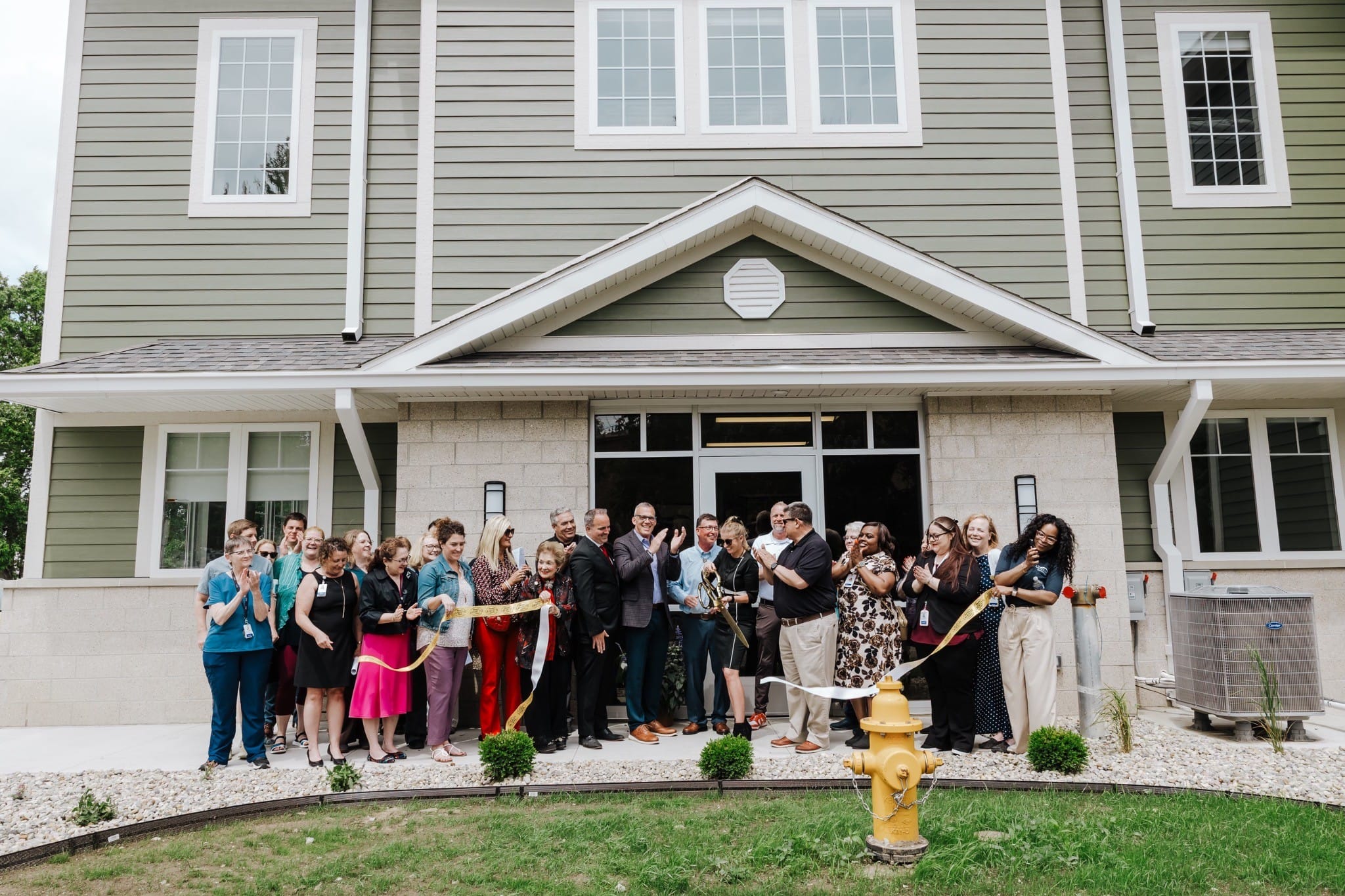
MERIDIAN HEALTH OPENS MEN’S RECOVERY HOME IN LAFAYETTE
The 26-bed facility at 1700 Salem St. is part of a continuum of care the organization says runs from detox to outpatient treatment
By Shelby White | Photos by Jennifer Boss | May 21, 2026
Meridian Health Services, a Muncie-based regional health system, marked the opening of an expanded men’s residential recovery facility in Lafayette on Tuesday, adding 26 beds to a regional treatment network that has seen opioid overdose deaths fall at four times the national average since 2023.
The new location at 1700 Salem St. operates under the Home with Hope brand, a Lafayette-based recovery residence that Meridian acquired through a 2021 merger. The city of Lafayette sold the property to Meridian for $1. The facility offers a 120-day recovery program, though residents may stay up to a year.
The building includes a large kitchen, pantry and multiple communal spaces where residents will learn to cook, shop, budget and manage the practical demands of independent life. On-site case managers meet with each resident weekly alongside a skill-builder and peer support specialist, working through life skills, financial planning, employment readiness and coping strategies. Men begin moving in June 1.
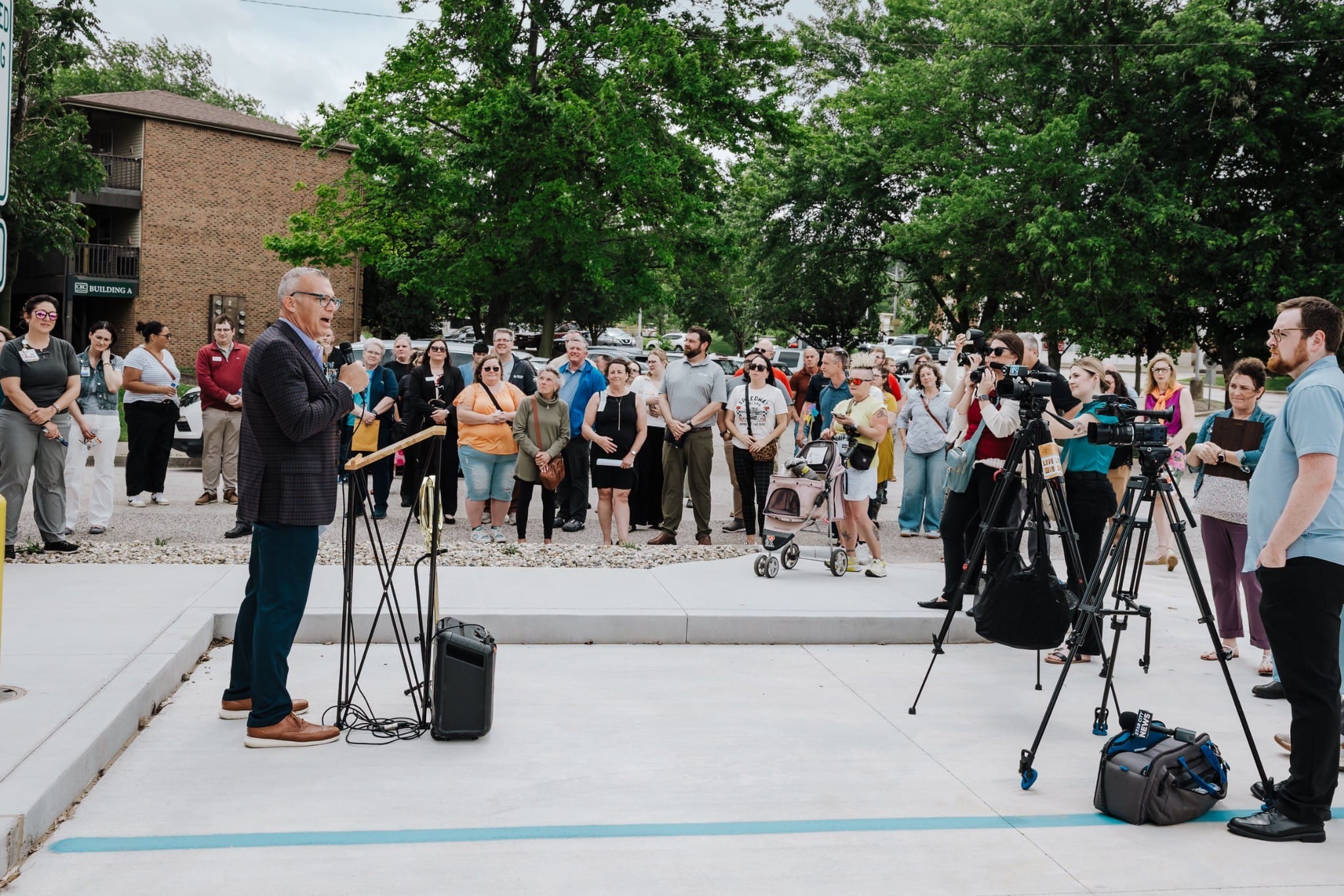
The opening arrives at a moment of cautious momentum for Tippecanoe County’s recovery infrastructure. The county recorded 44 opioid overdose deaths in 2021. That number fell to 37 in 2022 and to 28 in 2023, a 24% reduction that outpaced the statewide decline by nearly five times, according to the Tippecanoe County Health Department.
Officials credit the progress to a multidisciplinary approach, including partnerships among health agencies, law enforcement, mental health providers and recovery programs working in sustained coordination. Whether that trend holds depends in part on whether residential capacity keeps pace with demand.
Home with Hope draws residents from across the region and beyond. Surrounding counties regularly send men to the Salem Street facility, and occasionally residents arrive from other states, according to Jennifer Edwards, Meridian’s regional director of addictions and recovery services.
The new facility fits into what Meridian describes as a full continuum of care. A person entering the system today can start at the Addictions and Recovery Center, known as the ARC, a 21-day rehabilitation program, then transition to Home with Hope’s 120-day sober living program, move into a three-quarter living house and step down to outpatient services.
“We essentially hold their hand the entire way through to make sure that we are providing them with the tools that they need to succeed,” Edwards said.
That capacity has been shaped significantly by national opioid settlement funding. Since 2023, more than $2.2 million has flowed into Tippecanoe County from settlements that a coalition of state attorneys general reached with manufacturers, distributors and pharmacies deemed to have contributed to the national addiction crisis. The county is expected to receive roughly $1 million per year through 2040.
The Tippecanoe Regional Opioid Settlement Community Committee, known as the TROSCC, was formed in September 2023 to advise the disbursement of those dollars to local organizations. Commissioners have approved all 23 grants the committee has recommended across two funding cycles. Meridian has received settlement funding for Home with Hope and plans to apply in every future cycle, Edwards said, primarily to help cover living expenses for residents during their stay.
The settlement money has built out the ecosystem in which Home with Hope now operates. The HIVE Recovery Hub, formerly the Recovery Café, at 2300 Ferry Street used its first round of settlement funding to transform its operations. Settlement dollars helped the organization pay off its building outright. It now serves as many as 120 clients a day, up from as few as two before the funding arrived.
Dr. Greg Loomis, the county’s former health officer who served from 2022 to 2024 and lost a son to an opioid overdose, has since started the Outreach Advocacy Center, a front-line nonprofit that takes walk-ins — many of them people experiencing homelessness — and treats roughly 70 clients a week. The OAC addresses some of the most acute consequences of the current drug supply, including wounds caused by Xylazine, a veterinary sedative increasingly found in street drugs that can cause severe skin ulcers. It also distributes anti-psychotic medications and provides addiction counseling. The organization received $202,220 in settlement funding in the second grant cycle.
Greater Lafayette’s providers include CleanSlate Lafayette, which offers medication-assisted treatment for opioid and alcohol use disorder near IU Health Arnett Hospital and reports that more than 75% of patients test opioid-free within four weeks of starting care. Groups Recover Together operates a Suboxone and group therapy program.
Indiana Center for Recovery, which has grown to 10 statewide locations, runs intensive and standard outpatient programs locally. Long-term residential treatment — the structured, immersive kind where recovery is not an appointment but a way of living — remains the thinner part of that infrastructure. It is what Salem Street is built to address.
The expansion comes as Meridian and other regional providers brace for potential disruption from proposed federal Medicaid cuts. Edwards said several Meridian programs are funded exclusively through Medicaid, including services for individuals with intellectual disabilities and co-occurring mental health conditions such as anxiety and depression. Federal cuts are expected to take effect July 1.
Meridian is working with Anthem Medicaid to identify solutions and has deployed insurance navigators to help patients who may lose Medicaid coverage transition to other options. The organization also accepts commercial insurance and operates on a sliding-scale fee for self-pay patients.
The pressure on those programs comes at a moment when the economic argument for recovery infrastructure has never been clearer. Eighty percent of Indiana employers report witnessing prescription drug misuse among their employees, according to state data. Overdose-related deaths alone cost Indiana an estimated $1.4 billion annually. Addiction-driven absenteeism, turnover and lost productivity compound those costs across the region.
For a region competing for talent and investment, the availability of robust social support infrastructure — housing, healthcare, behavioral health, residential recovery — is increasingly part of the calculation prospective employers and residents make.
“Addiction has touched just about every family here. Every workplace. Every neighborhood. And for a long time, there haven’t been enough places to get the kind of help people need,” said Brittany Matthews, director of operations and events at Greater Lafayette Commerce, the region’s primary chamber of commerce and lead economic development organization. “Home with Hope is doing that work, and we are better as a community for it.”
The TROSCC is currently preparing its third funding cycle, which opened for applications March 27. The committee has overhauled its grant review process and added formal impact reporting requirements and a public listening session process designed to put people with lived experience of addiction closer to the decisions about where the money goes. The county is expected to continue disbursing settlement dollars annually through 2040.
A separate women’s program operates at 920 N. 11th St. Home with Hope accepts residents on a sliding-scale basis for treatment services. Housing costs are not income-adjusted.