Greater Lafayette’s bold bet on future-ready graduates
Greater Lafayette's bold bet on future-ready graduates
Local partnership builds scalable model for workforce success
 For decades, the arc of American public education has followed a familiar path: students follow a standard curriculum, graduate and then face the question of what comes next. In Tippecanoe County, Indiana, that question is being answered—systematically, collaboratively and with striking results.
This spring, more than 100 students from William Henry Harrison and McCutcheon High Schools earned their diplomas through a newly designed, locally created pathway aligned with Indiana’s new graduation seals. But the story unfolding in the Tippecanoe School Corporation (TSC) goes well beyond a new diploma requirement. It reflects a broader recalibration of what it means to prepare young people for graduation, and for life beyond it.
At the heart of this effort is Career+ Pathways™, a regional workforce development initiative led by Greater Lafayette Commerce in partnership with TSC, educators, employers, Skyepack and civic leaders. It began as a response to changing state policy but has since become something much more ambitious: a multi-year, county-wide strategy linking education directly to the demands and possibilities of the modern labor market.
The concept is simple, though rarely executed at this scale: start career-connected learning early, build it into the fabric of education and ensure that students graduate with a clear understanding of their next steps, whether that’s college, technical training or direct entry into the workforce.
“We’re proud to stand behind this work,” said Kara Webb, director of workforce development at Greater Lafayette Commerce. “Career+ Pathways gives us a sustainable way to develop talent, engage employers and ensure every student in our region sees a future for themselves right here at home.”
From exploration to action
It starts early. By eighth grade, students are introduced to Go For Growth, a career planning platform that helps them identify interests, strengths and potential career paths. This year, over 3,236 students used it to begin mapping out their postsecondary direction—be it a four-year university, a technical program or direct entry into the workforce.
“Go For Growth gives us actionable data,” said Katarina Webb, career advisor at Harrison High School. “It helps us recommend specific post-secondary programs, colleges or even local employers that align with a student’s aptitudes and interests. And we can connect them to job rotations, internships and experiences in high school that can reinforce that direction. In some cases, it helps students figure out what they don’t want to do, which can be equally valuable.”
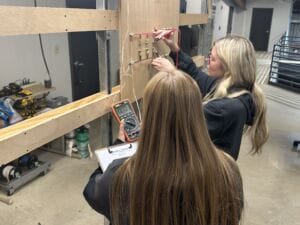
Students don’t explore careers in the abstract. They go to job sites, like engineering and health care facilities. They meet people doing the work. Through a structured system of employer visits, rotations and virtual chats, more than 3,720 TSC students engaged with real professionals this year; encounters that gave shape to their plans and, in some cases, altered them entirely.
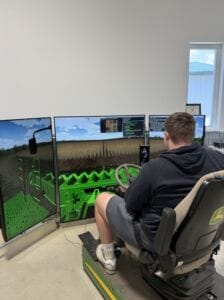
And for many, those experiences extended further. Career+ Pathways facilitated more than 3,312 hours of hands-on work-based learning in fields like manufacturing, healthcare, construction and technology. These weren’t summer jobs; they were structured, supervised and aligned with each student’s goals.
“These experiences don’t just check boxes,” said Harrison High School Principal Cory Marshall. “They reshape the way students think about their futures—and what’s possible.”
Clarity for the college-bound
While many TSC students head straight into the workforce, for others, the next step is college. But thanks to Career+ Pathways, it’s no longer a leap into the unknown. The Career+ Pathways™ system helps college-bound students refine their interests, confirm their chosen major through real-world exposure, and make
smarter decisions about how—and where—they pursue higher education. Students identify early-entry opportunities like dual credit, industry certifications, and summer programs that align with their plans. And they’re no longer left guessing which school is the right fit—they can evaluate which programs offer the best return on investment for their goals.
“This partnership has allowed us to integrate truly relevant and hands-on career exploration directly into our curriculum,” said Marshall. “It has opened doors to internships, apprenticeships, and direct industry exposure that were previously out of reach for many of our students. Our students are now regularly engaging with professionals in fields they’re interested in, gaining invaluable insights, and even earning industry-recognized certifications before they graduate.”
Instead of waiting until college to explore careers, students arrive on campus with direction, experience and confidence already in hand.
Real data, real decisions
The integration of Career+ Pathways into TSC’s curriculum wasn’t an add-on; it was a system-level commitment. Counselors and career advisors use real-time data to match students with postsecondary programs, certifications, and internships. Teachers incorporate career themes into coursework. Local employers offer access, not just to information, but to opportunity.
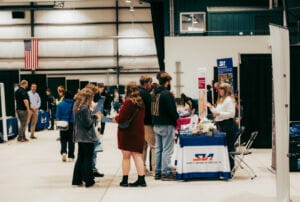
In April, that access culminated in HireME!, a regional interviewing fair co-led by Greater Lafayette Commerce. More than 520 students participated; nearly 100 received job offers or interview invitations from the 50-plus employers present. For some students, it was the first time they’d sat across from an employer. For others, it was the day their career began.
“Students don’t need us to decide their futures for them,” said Katarina Webb. “But they do need exposure. They need time. They need real data, and real support. We give them that.”
The 108 students who graduated through the full Career+ Locally Created Graduation Pathway this year left school with more than a diploma. They left with experience. With
certifications. With insight into what they want, and just as importantly, what they don’t. Many earned industry-recognized credentials before setting foot on a college campus.
“The impact of Career+ Pathways extends far beyond just job placement,” Marshall said. “It has fostered a deep understanding among our
students of the diverse opportunities available to them—whether that involves pursuing a four-year degree, attending a trade school, entering the workforce directly, or combining those paths. We’re seeing students make informed decisions about their next steps, leading to greater success and fulfillment.”
A region aligns
The implications reach far beyond the classroom. For a region like Greater Lafayette, where economic success depends on local talent, Career+ Pathways functions as both an educational framework and a workforce development strategy.
“Our partnership with Career+ Pathways isn’t just about providing opportunities,” Marshall said. “It’s about instilling a mindset—empowering our students to be proactive, adaptable, and prepared for the evolving demands of the 21st-century workforce. Every student deserves the chance to discover their passions, develop marketable skills, and chart a path toward a successful and fulfilling future.”
The takeaway? When communities stop asking students what they want to be when they grow up and start showing them what’s possible now, the entire system begins to shift.
Visit Skyepack.com to explore the full Career+ Pathways ecosystem and reach out to Greater Lafayette Commerce to learn how we can support scalable solutions that build stronger students, stronger schools, and a stronger Greater Lafayette.